Australian families feel like the goalposts are ‘constantly moving’ as they face the impact of a fifth rate rise
Get our breaking news email, free app or daily news podcast
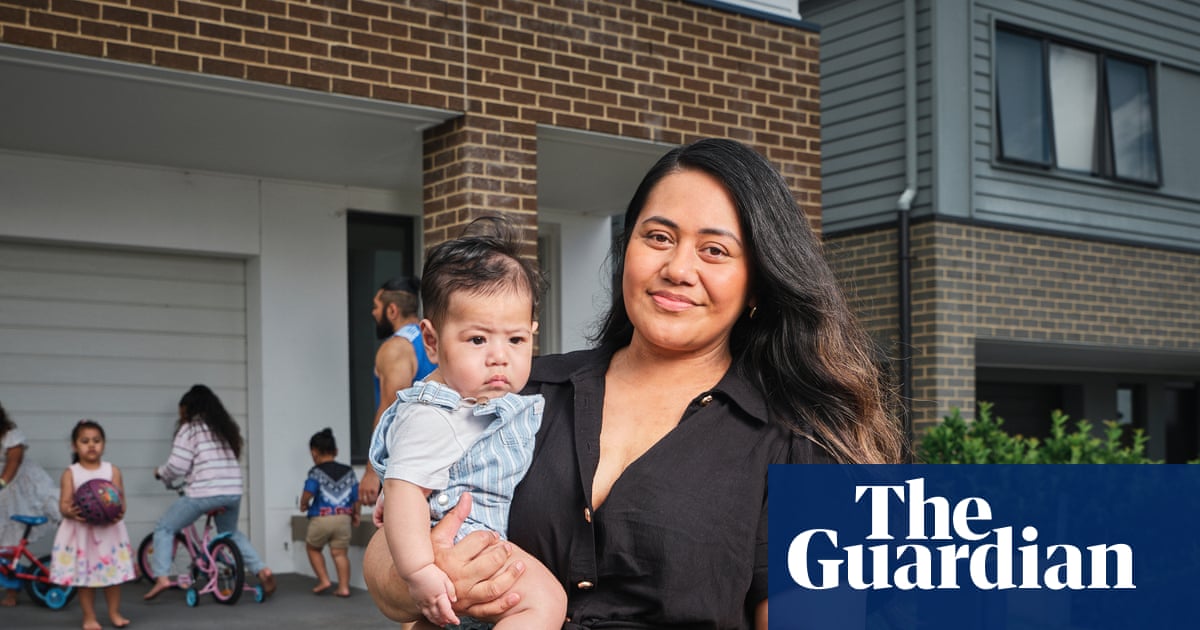
Sydney mum Avelima Satiu and her husband, Chris, each work two jobs to keep their household afloat. For the couple, every interest rate rise means more shifts, less time together and a family budget stretched even thinner.
“We have to review our budget; we usually look at how many extra shifts we can pick up,” Satiu says. “Even if it’s like an extra $100 or $200 that we get a month, that usually is enough to cover that rate hike.”
The Satius are among millions of mortgage holders left reeling from the Reserve Bank of Australia’s decision to lift its key interest rate on Tuesday from 4.6% to 4.85%, the highest since 2008.
The family lives in a four-bedroom home in the south-western Sydney suburb of Gregory Hills. With a mortgage of about $850,000, they pay about $1,350 a week in repayments.
Satiu, 36, works a nine-to-five job in finance and does freelance social media work on the side. Her husband works full-time in insurance and does disability support work on weekends. They work between 50 and 60 hours a week each.
“We don’t get to spend as much time as a family as we would like. A lot of the time is spent away from my kids. My husband works every weekend, he works seven days a week and his hours are long … but it’s the sacrifice we’re willing to make,” she says.
The couple’s youngest child arrived five months ago, and Satiu is back at work. They save thousands of dollars on childcare by “leaning on our village” and having an aunt live with them to care for the children while the couple works.
For Satiu, a second-generation Samoan who grew up below the poverty line and spent much of her childhood in public housing, it can feel like “the goalposts are constantly moving”.
“My parents were constantly struggling, and it was so stressful and it was such a negative environment. I feel like when you’re so excited because you get to own the home you’re in, then there are all these bills and then on top of that, your mortgage continually moves … It’s very hard to get ahead.”
After five consecutive rate hikes, Satiu says the blows are starting to feel “inevitable” and “the only thing that [I] can do is make sure that we’re ready for it”.
‘There has to be a different way’
Tiffany Betts is a 37-year-old university staff member who lives in Nowra, on the south coast of New South Wales, with her 67-year-old mother. In 2021, the pair pooled their savings to buy a house after decades of poor renting experiences.
Her mother, a former school teacher who is now fully retired, provided most of the deposit, while Betts pays the monthly mortgage repayments of about $1,200 a fortnight.
She says she feels her life has been stripped back to the bare minimum, constantly “scratching around” to find cuts to her budget to make ends meet.
“It’s tight, and it’s pretty confronting and nerve-racking. I am very frugal with my money. I don’t eat out, we very rarely go to the movies or spend on extras. There’s not really room for non-essential bits and pieces,” she says.
She says she feels the Australian dream “just doesn’t ring true any more” and that she is “stuck on a hamster wheel”.
“I work hard, I earn good money, and I still can’t get ahead in life. I live paycheque to paycheque because there’s just not the money left over to put into savings.”
Speaking after the announcement, the RBA governor, Michele Bullock, said that “this is not the news that many Australians want to hear, but it is what’s needed to get inflation down”.
“Every household is dealing with higher prices for groceries, electricity, insurance and other essentials. High inflation is particularly painful for Australians on lower incomes, including people who rent and have little or no savings to fall back on when most of your income is already going towards essentials; there is nowhere left to cut spending,” Bullock said.
“Some pain now will prevent even worse pain down the track.”
Betts says this week’s rate hike only adds to her “frustration and anger” as a homeowner.
“Homeowners are feeling the brunt of this, and we should not be having to do the heavy lifting for the whole economy. There has to be a better way, and other ways to share this burden more equitably across society,” she says.
“There has to be a different way to leave interest rates alone but still get the same impact of taking money out of the economy, one that shares it across the majority of society.”