
My father, Mike Bigger, who has died aged 95, was an expert on insect pests of tropical cash crops, particularly cocoa, coffee, cashew, teak and eucalyptus.
Employed by the Overseas Development Agency as a tropical entomologist from the late 1950s until the early 90s, he lived all over the world, establishing research stations in Tanzania, Kenya, Ghana, the Solomon Islands and Bhutan and becoming an early adopter of the mathematical modelling of insect populations, which enabled him to propose alternatives to blanket pesticide spraying of tropical cash crops.
He discovered, for example, that changing the density of trees used to shade cocoa plantations can help to promote black or weaver ants that drive out smaller fire ants, whose stings can result in severe burns for cocoa plantation workers.
Mike was born to British parents in Nablus, in what was then the British Mandate of Palestine (now the West Bank), where his father, William, was a medical doctor and his mother, Dorothy (nee Vigers), was a pharmacist.
When Palestine began to descend into violence, the family moved to the UK, where Mike was educated at Campbell college, Belfast. He subsequently studied natural sciences at Trinity College Dublin and tropical entomology at the Imperial College of Tropical Agriculture in Trinidad (1955-56).
On his return to the UK, he joined the Overseas Development Agency, which in 1957 sent him on his first foreign posting, to Nachingwea in Tanganyika (now Tanzania). While on leave, he met Gerry Whitcroft, a biologist; they married in 1962 and spent much of the rest of their life together living in far-flung locations. Often they lived for long periods with few visitors and only a short-wave radio for communication, but they thoroughly enjoyed their experiences over the years.
After a final posting for Mike in Bhutan, in 1989 they returned to the UK, to live in happy retirement. He donated his insect collections to various institutions, including the British Museum; sadly many that he left behind in the Solomon Islands were destroyed during a coup there in 2000.
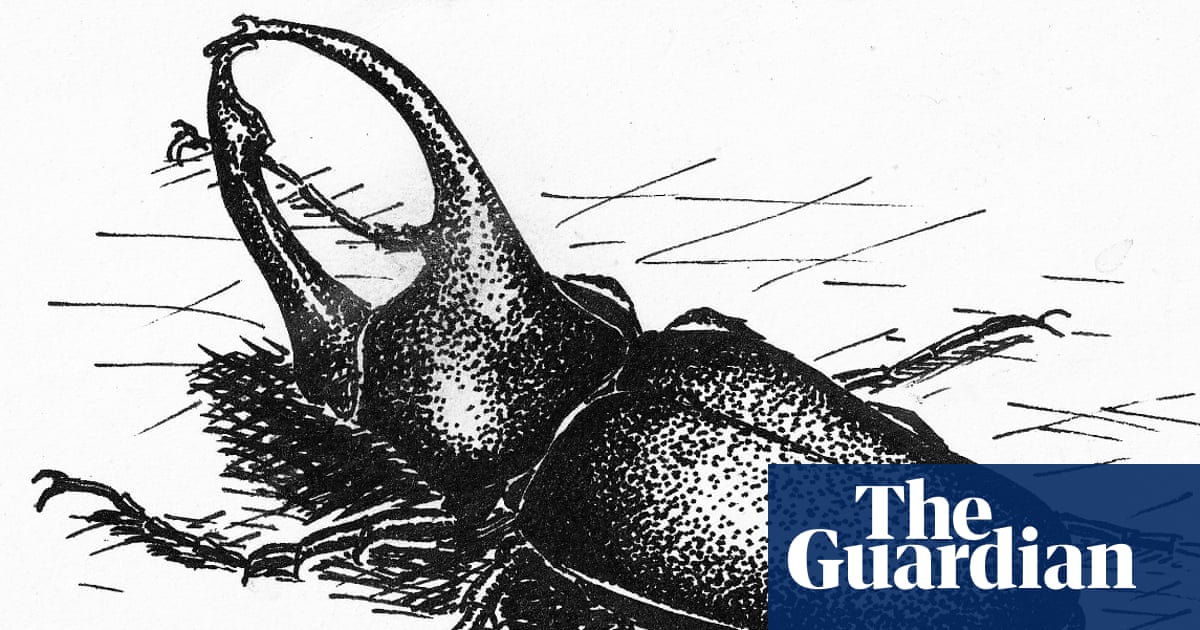
As well as being an intellectually rigorous scientist, Mike was extremely creative, and his drawings of insects were published in seven books, including The Insect Pests of Forest Plantation Trees in the Solomon Islands (1988) and A Guide to Insect Pests of Nigerian Crops (1996). He was also a master wood carver, and made tapestries and wooden toys.
Gerry died in 2024. Mike is survived by their two children, Clare and me, and five grandchildren.