
Nick Peacey, who has died aged 83, was known in north London for his work with Lauderdale House, the arts and education centre in a rescued Tudor building in Highgate. He combined a commitment to improving educational opportunities with a passion for local history and the arts.
Born in Salisbury, Wiltshire, to Theodosia (nee Hale), a social worker, and Thomas Peacey, who ran a bookshop, Nick went to Lancing college in West Sussex, and then studied classics at Christ Church, Oxford, from 1961.
He spent most of his professional career working in the field of special educational needs and disability (Send), teaching in the London borough of Haringey, where he supported young people excluded – or at the risk of exclusion – from school. He joined the UCL Institute of Education in 1990, where he worked with local and national government and international organisations on Send development and teacher education.
Alongside his career, Nick devoted almost 50 years to Lauderdale House, which I joined in 1998, becoming director in 2013. He became a founding trustee of the Lauderdale House Society in 1978 and served as chair from 1983 until 2017, helping transform the fire-damaged historic building into the thriving independent arts and heritage charity it is today. Following the completion of its £2.1m restoration he was appointed MBE in 2018. He continued as vice-chair until his death.
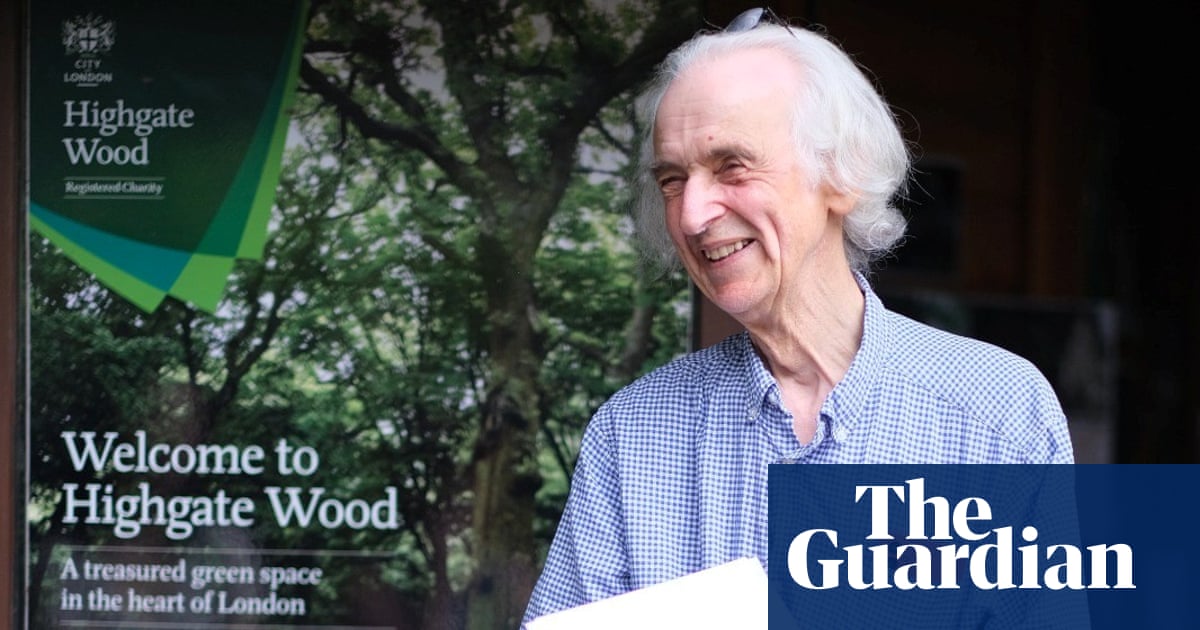
An advocate for heritage and learning, he also led the campaign from 2018 to return the Highgate Roman kiln – excavated in the 1960s and 70s but later in pieces in storage at the Bruce Castle museum in Tottenham – to its original site in Highgate Wood, securing funding from the National Heritage Lottery Fund for its restoration and public interpretation. As a young teacher in the early 70s, he had been involved in a project to build several reconstructions of the kiln and to undertake experimental firing of vessels.
He also founded the Gallipoli Music Memorial charity, marking the centenary of the Gallipoli campaign through music, education and remembrance, inspired by the story of his great-uncle the composer William Denis Browne, killed in action in June 1915.
Nick’s interests were remarkably wide-ranging. He was a board member of the charity Foundation Years Information and Research, formed by professionals, academics and policy makers interested in the field of child development, and chaired by MPs, originally Frank Field, and subsequently Catherine West and Maya Ellis; the group seeks to promote understanding of the extent to which earliest relationships shape a baby’s brain and to highlight the importance of resources and structures to support caregivers.
He was also a fellow of the UCL Institute of Education Centre for Educational Inclusion and an active Labour party supporter, and he researched his own family history, publishing in 2013 The Inflations & Deflations of the Spencer Family: Balloons, Bikes & Camels.
In 1968 he married Lindy Hill. She survives him, along with their two daughters, Sarah and Caroline, and two grandchildren.