
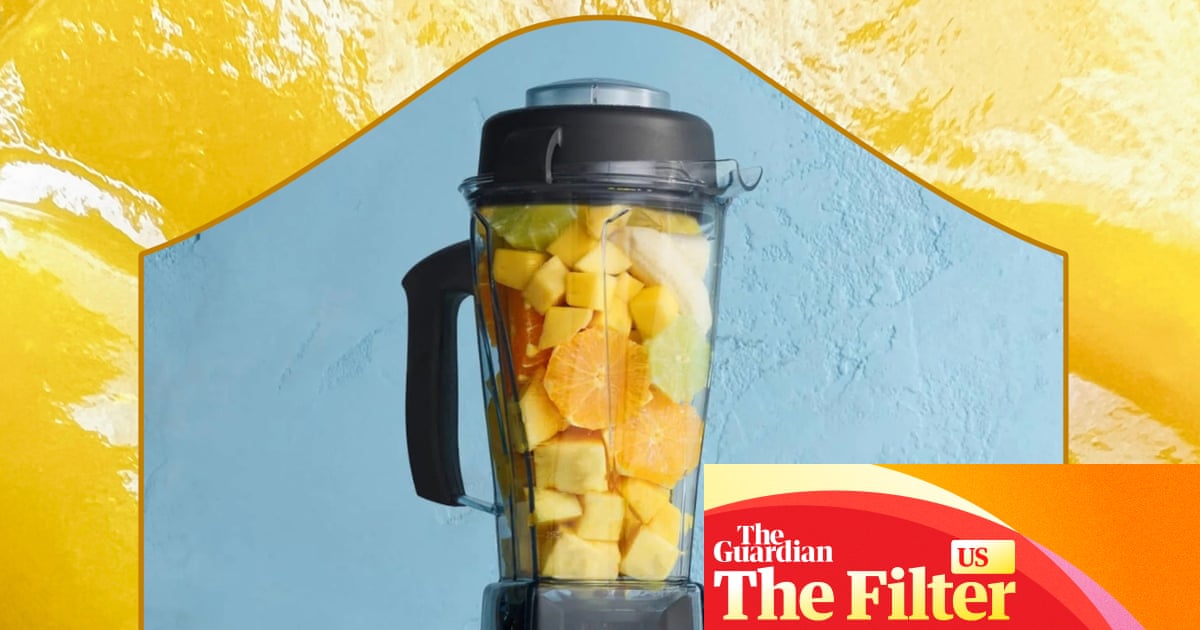
I tested more than a dozen blenders in Brooklyn, including from Vitamix and Breville for budget, size, mulch factor, speed and whether they had plastic or glass jars
In the UK? Check out Filter UK’s top-rated blenders here
Jump to:
There are few breakfasts that feel as healthy and refreshing as the ever-mutable smoothie. You can make them virtuous, with lots of greens and nut milk, or luscious, with full-fat dairy and cocoa powder – but in order to make a good one, you need a really good blender.
And while smoothies are the classic use for a blender, these appliances can do so much more; a truly great blender is a kitchen workhorse that can make your morning smoothie, your afternoon dip, your evening soup and even a frozen drink if you’re feeling frisky.
While blender technology has definitely improved in the last few decades – we now have high-speed contraptions that can make peanut butter in less than a minute – they’re all basically attempting to turn large pieces of food into a smoother result. If you’re looking for a new one, we’ve tested the best in the business.
We test a lot of kitchen gear at the Filter US! Be sure to check out our guides to the best plastic-free cutting boards, air fryers, nontoxic cooking pans, induction cookware sets, rice cookers and more.
This article was updated in fall 2026. We’ve added a new stainless steel best personal blender pick, and included some other models to the Other blenders we’ve tested, along with a bit more context on what we like or dislike about them.
Best blenders at a glance
Click the jump links to read our review of each blender, photos and retail links. Or keep scrolling.
Best overall blender: Breville Fresh & Furious
Very best blender (luxury): Vitamix 5200
Best glass blender (also best for ice crushing): KitchenAid Pure Power Blender with Glass Jar
Best glass blender under $100: Hamilton Beach Smoothie Start Glass Blender
Best compact personal blender: The Beast Mega 1200 Plus
Best blender for quick smoothies: Nutribullet Pro 900
The most plastic-free blender: Oster Classic Series Heritage Blender with Glass Jar
Other blenders we tested: What’s OK and what to avoid
How we test blenders: And our mission at the Filter US
Blender features you should look for: Figuring out your needs
How to clean a blender: A few small tips to help
Best blender overall:
Breville Fresh & Furious
This Breville is one of only three blenders that could crush ice without the assistance of a tamper or a splash of water. If you’re looking to make frozen margaritas on the cheap, this one is for you.
The Breville website claims that the blades offer a mix of blending and food processing functionality; I tried chopping some carrots, and it was more of a shred. Still, it’s a useful option. It also whipped up a bright-green pesto quickly. While it wasn’t as silky smooth as the Vitamix pesto, it got pretty close. The smoothie, too, had a bit more texture than the Vitamix smoothie, but at nearly a third of the price, it feels like an acceptable tradeoff.
I also liked the lid design: it fits very tightly and securely into the jug and features a loop that helps you pull it off easily.
It’s a shame that … Although it comes in seven different colors, from “red velvet cake” to “olive tapenade”, this isn’t the sleekest-looking blender of the bunch. And if you’re obsessive about texture, you may find that your smoothies and soups aren’t perfectly smooth.
Jar size: 50 ounces
Power: 1,100W
Speeds: five, plus features such as crushed ice and pulse
The very best blender (luxury):
Vitamix 5200
Across all my rounds of testing, the two Vitamix blenders I reviewed consistently produced the smoothest product, though this one had the edge. (Read our full Vitamix 5200 review.)
Whether I was sipping a smoothie, spooning a soup or (let’s be real) dipping a finger into a batch of pesto, this blender produced luscious, vibrant results, even keeping green and purple smoothies from turning muddy in color. It also worked quickly, turning a chunky soup into a puree in less than a minute, while other competitors took 90 seconds or more to create a mulchier result.
After a few rounds of testing, the touchscreen of the more expensive Ascent ($750 compared to the 5200’s $470) stopped working, and the blender was unusable. Even if the Ascent had kept working throughout my testing, the results were basically the same as those of the 5200.
I also appreciated that the 5200 offered an array of speeds, without an excess of settings. There’s an on/off switch and a switch that lets you choose high speed or variable speed; if you choose variable, a dial at the center of the control panel lets you go from zero to 10 as you like. The device will also “pulse” in case you want to make something chunkier, such as salsa. And it comes with a tamper, to help break down anything super thick like peanut butter. Finally, it has a seven-year warranty.
It’s a shame that … It’s definitely loud. At just over 20in tall, it’s also too large to fit under some people’s cupboards.
Jar size: 64 ounces
Power: 1,380W / 120V
Speeds: 10
Best glass blender (also best for ice crushing):
KitchenAid Pure Power Blender with Glass Jar
There is a growing market for blenders with plastic-free jugs, and we’re here for it. Unless you want to shell out for the Vitamix Stainless Steel container ($250), this is the best blender you can buy that’s made with glass.
Of all the glass-jug blenders I tested, the KitchenAid offered the smoothest results. Its smoothies and soups didn’t have the silkiness you can achieve with a Vitamix or Blendtec, but they were much smoother than those of every other glass-jar blender that I tried. I even threw full handfuls of curly kale in there, stem and all, and my smoothie still came out rich, creamy and mulch-free.
Like the Vitamix 5200, this model has simple dial control. When I’m under-caffeinated in the morning and just trying to make myself some quick breakfast, I get impatient with blenders that have too many buttons. Unless I’m crushing ice, or trying to pulse a pesto without making it too smooth, I’m content just slowly turning it up to speed 10 and waiting 30 seconds. (The KitchenAid Pure Power made quick work of my smoothie and soup, too.)
Finally, its ice crush setting might just be the best I have tested, and it comes in a pleasing array of colors – from understated matte black to cherry red.
It’s a shame that … Since this jug has a wider, rectangular base, you won’t be able to make a single serving of pesto the way you can with a narrower base, but it can handle thicker mixtures easily.
Jar size: 62oz
Power: 1200W
Best glass blender under $100:
Hamilton Beach Smoothie Start Glass Blender
A sub-$100 blender isn’t going to give you the smoothest, silkiest result compared with some of the most expensive picks on this list. But it can absolutely be a reliable part of your kitchen routine, even for a smoothie-head.
The Hamilton Beach Smoothie Start is designed for drinks and it can easily turn some fruit, yogurt and ice into a drinkable breakfast. If you’re trying to add a bunch of fibrous stuff, such as kale, seeds or oats, you’ll have to accept a slightly textured drink, but I know from experience that some people like drinks with a bit more texture. Its ability to crush ice also gives it a day-to-night vibe – you can use it for virtuous smoothies in the morning and frozen margaritas in the evening.
I liked the simplicity of the buttons: the main one is “smoothie”, with options for “icy drink” and “ice crush.” (Don’t let the hyper-specific marketing fool you – you can also blend a soup, though it’ll stay a bit chunky.) The pour-spout on the lid also made pouring my morning smoothie easier than some blenders, especially when I was bleary-eyed.
It’s a shame that … this blender isn’t a good choice for whipping up perfect peanut butter or pesto any time soon, but it will help you get your daily allotment of morning fruit without much fuss.
Jar size: 40oz
Power: 850W
Speeds: three
Best compact personal blender:
The Beast Mega 1200 Stainless Steel
Last year, I called the Beast Mega 1200 Plus the best personal blender. This year, the company has upgraded its offerings with a stainless steel option, and I’m loving it. Like other Beast blenders, the Mega Stainless Steel comes with everything a blender owner (and smoothie drinker) might need: a straw, various jar sizes, drinking spouts and caps, a straw cleaner and even a brush for cleaning the blender blades.
Of the personal blenders I’ve tested, the Beast models consistently produce the best results, blending everything evenly from pesto to soup. While the 1200 couldn’t blend nut butter or crush ice, I’m not sure that there’s a personal blender on the market that can, and it was definitely the best for thick smoothies. I also liked the color options – I tested a dark blue model. It offers two speeds: “pulse” and “blend”.
Beast blenders come in three sizes, with three different motors between them. I tried the mid-sized “Mighty” this time, and found that I could tell the difference between its 850 watt motor and the Mega’s 1,200 watts. (I tend to put a lot of chia seeds in my smoothies, and this was the tell.) So I’m recommending the Mega Stainless Steel here. One bonus I enjoyed is that the stainless steel jug is lighter than the plastic one. I’ve actually been using it as a smoothie jar.
It’s a shame that ... The stainless steel models still come with two Tritan plastic jars – a small one that’s great for pesto, and a mid-size one that’s quite flexible. They are nice jars (though very heavy plastic), but why include plastic jars with a stainless steel model? Hopefully Beast will phase out the plastic and phase in more steel in the future.
Jar size: 23.5oz
Speeds: 1 (with a pulse option)
Alternative pick: The Beast 850 Mighty ($159) is an excellent choice, too. It’s just a little less powerful. And the Beast Mega 1200 Plus ($219) is essentially the same, but has a plastic jar.
Best blender for quick smoothies:
Nutribullet Pro 900
If you want a personal blender that will make good smoothies and shakes you can take to the gym – or you balked at the Beast’s $219 price tag – the Nutribullet is your friend.
At about $100, the Nutribullet blended smoothies that were only slightly more textured than those of its more expensive counterpart, and it handily blended soup and pesto without any problem. It also comes with a second jar, a lid for drinking and a clunky-looking but totally effective detachable handle. This jar was basically designed to be thrown in a gym bag.
It’s a shame that … Its smoothies weren’t the smoothest, but they still did the trick. Its jars are also made of plastic.
Jar size: 32 ounces
Power: 900W
Speeds: one
The most plastic-free glass blender:
Oster Classic Series Heritage Blender
The Oster felt decidedly nostalgic. I’m pretty sure that my parents had the same one in the 1990s, with its flip-on switch and tapered glass jug. It’s also the only blender that arrived with zero plastic packaging: all cardboard, no useless baggies.
If you’re looking for a blender that will minimize potential exposure to microplastics, this is a great option, thanks to its glass jug. The lid is still plastic, but has less contact with your food. It also offers a 10-year warranty – even longer than the Vitamix’s.
Its a shame that … its blending capabilities left something to be desired: it produced a decidedly mulchy green smoothie, and it never got soup as smooth as its competitors.
Because the base is so narrow, it’s also difficult to clean by hand, as the area beneath the blades is a challenge to reach.
Jar size: 48 ounces
Power: 1,000W power/600W blending
Speeds: two
Other blenders we tested
These blenders weren’t featured above, but I did review and test them.
We also liked these:
Waring Classic Bar Blender with Glass Pitcher ($300 at Waring): Another strong contender from Waring. I liked the classic design of the glass pitcher, which reminded me of the blender I grew up with. It has the same motor as the stainless steel option we picked for Best stainless steel blender, but with a smaller jug.
Blendtec Total Blender Classic ($380 at Amazon; $400 at Blendtec): This blender is nearly as powerful as the Vitamix 5200, and crushes ice in a snap. That said, it doesn’t come with a tamper, and has a wider base than the Vitamix, so while it’s cheaper, it doesn’t offer the widest range of utility.
Beast 850 Mighty ($159 at Beast; $159 at Amazon): I mentioned this in the Best personal blender section, but the 850 Mighty is just about as good a pick as the Beast Mega Stainless Steel. I is an excellent choice, too. It’s just a little less powerful. And the
Beast Mega 1200 Plus ($219 at Beast, $229 at Amazon): This was my previous Best personal blender pick, and it is essentially the same as the current model from a power perspective, but it has a plastic jar. If you prefer plastic over stainless steel, opt for this.
We would avoid these:
Hamilton Beach Wave Crusher ($57): This was slightly less effective than the other Hamilton Beach pick, and offered the least smooth smoothie of the lot.
Vitamix Ascent X5 ($750): This was super powerful and sleek, but the touch screen died on me after a few uses. It’s difficult to recommend such a pricey model after such major reliability issues.
Cuisinart Hurricane ($190): This blender made pretty smooth smoothies, but it couldn’t crush ice or handle a batch of pesto. Our top pick is a bit cheaper and a much better blender.
Zwilling Enfinigy Personal Blender ($190): I liked the simple design of this, but it just didn’t have a powerful enough motor. I also think that the narrow vessel makes it hard for things to blend effectively.
How we test (and our mission at the Filter US)
Why you should trust the Filter US
Our mission is to help you filter out junk products and buy fewer, better things.
At the Filter US, we test the products we recommend ourselves and never take your trust for granted. We also consider possible impacts on your health or the environment in our coverage and companies cannot purchase a spot in our product rankings because we are here to serve you, not corporations.
Our dedicated testing, editing and production teams are based across the United States. We are a part of the Guardian’s US editorial team and our journalists follow its strict ethical standards. Learn more about us here.
Who I am
Marian Bull: I live in Brooklyn, New York and have been writing about food for more than a decade, whether that’s creating recipes, editing cookbooks or reviewing restaurants. I’m an obsessive home cook with a small kitchen: I love an efficient kitchen tool and don’t have patience for useless bits and bobs.
I’m also a habitual smoothie maker, meaning that I’ve made hundreds of morning drinks, as well as plenty of pesto and endless sauces, in my own refurbished Vitamix – and cleaned it by hand each time.
How I tested all these blenders
I’ve done a few rounds of blender testing for this guide over the past year. Most of the models I’ve tested are mentioned in this guide. I start by spending a few weeks researching the wide world of blender options, then select and test a variety of blenders, from full-size to personal blending.
So far, I’ve skipped immersion blenders because comparing them to high-powered blenders felt like comparing a bike to a Hummer: they have different uses and vastly different power levels.
I tested each blender’s ability to make the following: crushed ice (to replicate frozen drinks), peanut butter, pesto, smoothies and a broccoli-potato-white bean soup. After each test, I washed the blenders by hand, making note of how annoying they were to wash without the luxury of a dishwasher. I also made note of what “extras” they came with, how they were packaged and what they were made of.
I’m donating the blenders I tested to St Mary’s Clothing Drive in Brooklyn, a wonderful charity near my apartment.
Blender features you should look for
Choosing your blender will have a lot to do with how you want to use it. Do you just want to make shakes for the gym, or are you an obsessive home cook who has always wanted to make hummus?
When it comes to jug blenders, the motor’s power is the factor that most contributes to the blender’s ability to do its job, but jug shape also comes into play. A more narrow, round base will blend small quantities better than a wider, square base.
If you’re just looking for a smoothie-making machine, or you have very limited counter space or budget, a compact personal blender (single-serve) is likely your best bet, thanks to its small footprint and because the jar turns into a to-go vessel for your drink.
Jug blenders are better for larger jobs, or thicker mixtures, such as thick smoothies, nut butters, spreads and soups. A higher-power blender is going to offer a smoother consistency and faster results.
How to clean a blender
Most high-speed blenders can clean themselves with a little help. Rinse out your blender as best you can, add a squeeze of dish soap and fill halfway with water. Then blend on high for a minute. Unless you were blending something particularly sticky, this should clean out your blender, and all you have to do is rinse it. You may have to wash the lid by hand.
Personal blenders are a little different. Cleaning the jars is the same as cleaning a water glass. Be careful when cleaning the blades. I like to soak them in hot soapy water for about 20 minutes, which will loosen any bits of soup that have lodged in crevices.
Other pieces you might enjoy from the Filter, the Guardian’s guide to buying fewer, better things:
The best nontoxic pans, tested in a food lab
The best pots and pans for induction stoves
Our favorite plastic-free kitchen tools and upgrades
The best sleep masks you can buy (we’ve tested 30+)
Marian Bull is a New York-based freelance writer with more than 10 years of experience in writing and testing recipes, chopping endless onions and hand-washing her cutting board in her tiny kitchen. Her favorite food is fried toast.