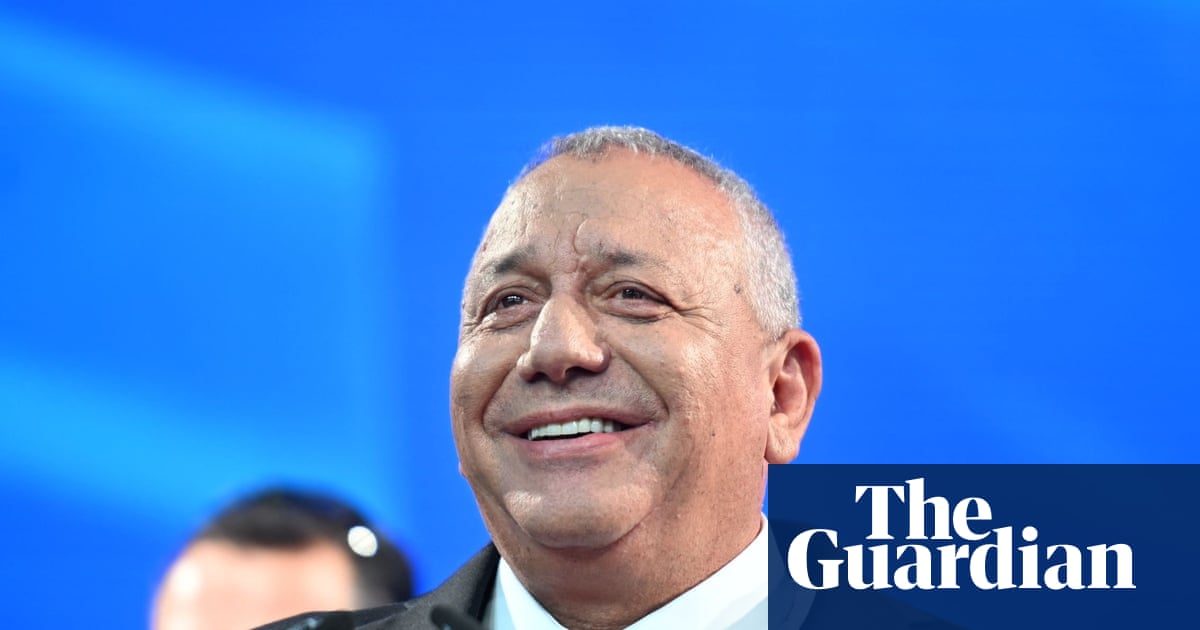
Jess Wilson, who once supported the federal Indigenous voice to parliament, has vowed to repeal Victoria’s treaty within the first 100 days of a Liberal government
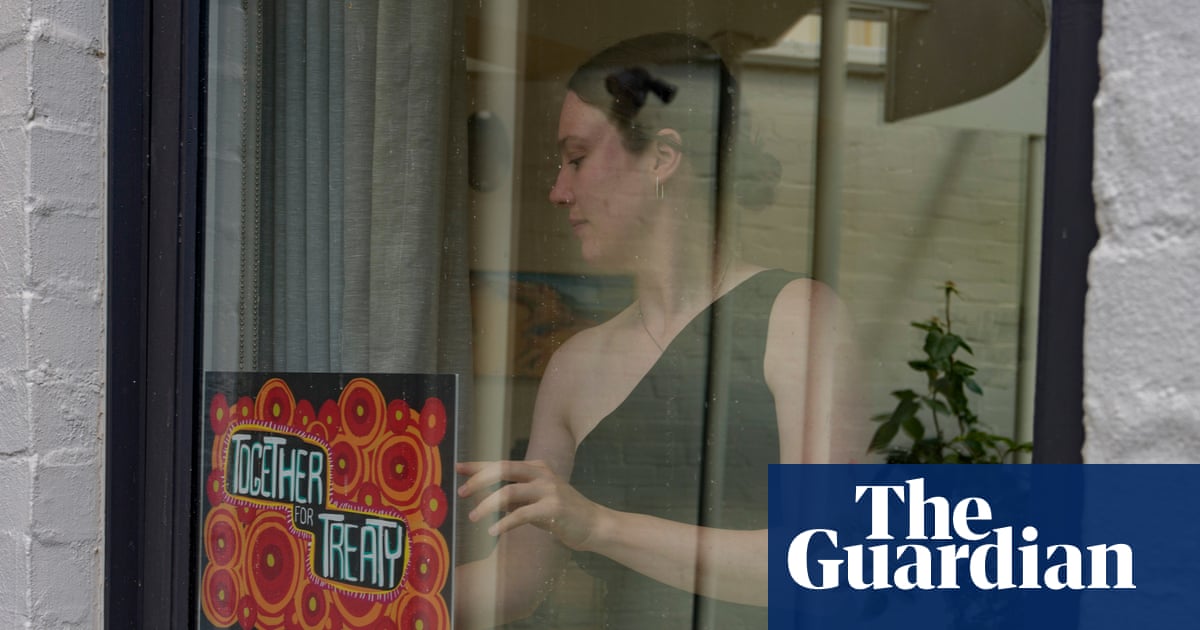
On a warm Saturday afternoon in the affluent suburb of Kew in Melbourne’s inner-east, three volunteers approach a stately two-storey home armed with a printed page of talking points on Australia’s first-ever treaty with Indigenous peoples. This is one of the most expensive areas in the city, where homes are heavily secured and worth millions. The trio have already been turned away from multiple houses. But this time they are greeted by 26-year-old Paris Riebeling, the first local keen to speak with them.
She opens the door to reveal a large piece of Aboriginal artwork on the wall behind her. She talks about living a privileged life in the “lucky country”.
“It’s always so interesting to be unlearning what living in and growing up in Australia is like,” she says.
Riebeling has lived with her mother and sister in the electorate of Kew since she was a baby. Her local member is the Liberal MP and state opposition leader, Jess Wilson, who has vowed to introduce legislation to repeal Victoria’s treaty with First Nations people within the first 100 days if the Coalition wins the state election on 28 November. One Nation has also pledged to overturn the body.
The state seat of Kew sits within the federal seat of Kooyong, a longtime Liberal party stronghold that has been held by the independent MP Monique Ryan since 2022. It is one of a minority of electorates to have voted in favour of a national Indigenous voice to parliament in the 2023 referendum, with a yes vote of 59%. Wilson was the only Liberal MP in Victoria to publicly support the voice.
It is an affluent, highly educated, predominantly white suburb. But that does not mean treaty is an unimportant issue, Riebeling says. She tells Guardian Australia that issues affecting First Nations peoples are “definitely something that we talk about”.
“I have a lot of privilege and I’m very aware of that,” she says. “I think part of that is acknowledging that, while I didn’t personally do anything, my ancestors did and I benefit from that.”
Checks and balances
Formal discussion around treaty in Victoria began in 2016, with a series of dialogues between traditional owners and Daniel Andrews’s Labor government. The First Peoples’ Assembly of Victoria, an independent and democratically elected body representing traditional owners, was established in 2019, and the Yoorrook Justice Commission, which conducted a statewide truth-telling project, began in 2021. Last November, the historic Statewide Treaty Act 2025 passed state parliament and established a permanent, statutory First Peoples representative body known as Gellung Warl.
Gellung Warl has the power to make rules on a limited number of matters directly affecting First Nations peoples, including guidelines for trading and sharing existing water entitlements between First Nations groups, appointing a First Nations person to the statewide heritage and Aboriginal heritage councils, and creating cultural safety guidelines that may be voluntarily adopted by non-Indigenous agencies. It does not have the power to veto policy or legislation. The independent treaty authority also assists in the negotiation of other agreements between specific traditional owner groups and the state.
Despite this limited scope, it is the strongest step toward self-determination taken by any Australian government since the creation of the Aboriginal and Torres Strait Islander Commission in 1990. That body was unilaterally abolished in 2005 after allegations of corruption. No such allegations have been made about Gellung Warl.
“The thought of treaty being scrapped in the first 100 days after it took 10 years to create is just completely devastating to me,” says Anna Langford, one of the volunteers door-knocking for advocacy group Together for Treaty, a national grassroots movement dedicated to supporting First Nations truth-telling, self-determination and treaty-making.
“It’s just alarming to me that something so important, that so much care has gone into, could be destroyed and most people might not even know that it was there in the first place or sense the importance of it.”
A few streets over from Riebeling, retiree Geoffrey Jewell says he knows “nothing at all” about Gellung Warl but that he’s in favour of treaty “if it helps to give better conditions for Aboriginals to live in, and helps them better understand our society as well”.
“In other words, talking together,” he says. “I think that’s the way to go forward.”
He adds:“I don’t think denying people were here and have been denied resources for a hundred years or more is it. I see the difficulties for the Europeans at that time [of colonisation] but now we know more, and I’m sure we can get to understand more and accommodate things.
“I mean, we see in America just what a society is like when people are not involved and not taking part, and I don’t want to see that happen in Australia for my children and grandchildren.”
The Coalition argues that scrapping treaty would save the state almost $1bn. A Parliamentary Budget Office report requested by Wilson earlier this year found that repealing the treaty laws would save taxpayers $948.3m over the next 10 years . Labor disputed the figures, saying the report included the costs of various services and programs for First Nations peoples that are separate from treaty.
A Coalition campaign spokesperson said the operating cost of Gellung Warl would be better spent on “practical outcomes in health, education, housing and community safety, not more bureaucracy”.
“Our focus is on delivering practical outcomes that make a real difference to the lives of Victorians. That also includes delivering better outcomes for Aboriginal Victorians,” they said.
Gellung Warl co-chair Djaran Murray-Jackson says the long-term goal for treaty in Victoria is self-determination.
“Treaty is an investment in better outcomes and stronger communities, creating opportunities to grow First Peoples businesses and build economic independence,” he says. “Stronger First Peoples economies mean more jobs, investment and opportunities across Victoria, while helping communities shape their own futures and reducing reliance on government systems that haven’t always worked for them.”
Fellow co-chair Meriki Onus says treaty has become “part of the fabric of Victoria” and that elected Gellung Warl members are answerable and accountable to their communities.
“We’re on track to deliver the first steps in economic empowerment and education for our communities within our first six months, while ensuring First Peoples are leading conversations about the issues that affect our lives,” she says. “That’s the work we’re getting on with.”
Protecting Gellung Warl
A YouGov poll in July, commissioned by the First Nations-led not-for-profit group Common Threads, found 58% of respondents said that scrapping Gellung Warl “is out of touch with their priorities across inner, outer, provincial and rural electorates”.
Common Threads spokesperson Tarneen Onus Browne, a Gunditjmara, Yorta Yorta, Bindal and Meriam woman, says treaty is “not really an issue for the general population”.
“It’s just legislation that affects First Nations people but it’s also an agreement with the state that wants to reset the relationship between First Nations people in Victoria,” she says.
Meanwhile, the Victorian Aboriginal Community Controlled Health Organisation (VACCHO) has launched an advertising campaign, calling on voters to “protect” treaty.
Its acting chief executive, Jim O’Shea, says First Nations peoples “fought for generations to create change and build a better future for our children and grandchildren” and supporters of treaty “cannot take this progress for granted”.
“We need to protect what has been achieved and continue building on it, not go backwards,” he says.