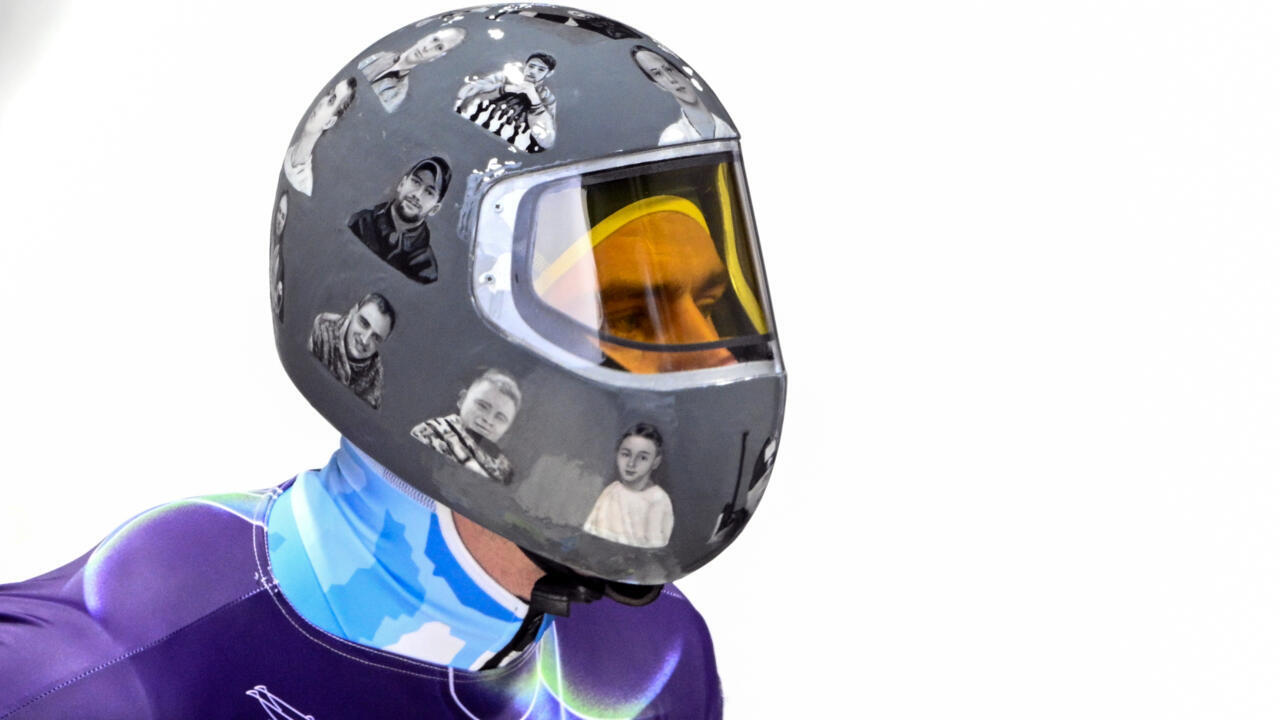
Ukrainian skeleton racer Vladyslav Heraskevych was disqualified from the Winter Olympics by the International Olympic Committee (IOC) on Thursday for his insistance on wearing a helmet depicting Ukrainian sportsmen and women killed during the war with Russia. The IOC said that the athlete had not adhered to its "athlete expression guidelines". Heraskevych has filed an appeal.
Issued on: 12/02/2026 - 09:45Modified: 12/02/2026 - 20:43
Ukrainian skeleton racer Vladyslav Heraskevych was disqualified from the Winter Olympics on Thursday after refusing to back down over his banned helmet, which depicts victims of his country's war with Russia.
In a statement, the IOC said Heraskevych had been kicked out of the Milan-Cortina Games "after refusing to adhere to the IOC athlete expression guidelines".
Read moreUkrainian skeleton racer vows to wear banned helmet honouring war victims at Olympics
Heraskevych appealed his disqualification to the Court of Arbitration for Sport (CAS) later Thursday.
"The application challenges the IBSF (International Skeleton Federation) Jury decision stating that Mr Heraskevych intended to wear in competition a helmet displaying portraits of Ukrainian athletes who lost their lives in the war, which was considered as being inconsistent with the Olympic Charter," CAS said.
Prior to the IOC's decision, Heraskevych had insisted he would continue to wear the helmet, which carries pictures of Ukrainian sportsmen and women killed since Russian forces invaded Ukraine in 2022, during the men's skeleton heats on Thursday.
His gesture was defended by Ukrainian President Volodymyr Zelensky.
Read moreLive: IOC’s ban on skeleton racer ‘plays into hands’ of Russia, Zelensky says
"Having been given one final opportunity, skeleton pilot Vladylsav Heraskevych from Ukraine will not be able to start his race at the Milano Cortina 2026 Olympic Winter Games this morning," the IOC statement announcing the ban said.
"The decision followed his refusal to comply with the IOC's Guidelines on Athlete Expression. It was taken by the jury of the International Bobsleigh and Skeleton Federation (IBSF) based on the fact that the helmet he intended to wear was not compliant with the rules."
Athletes are permitted to express their views in press conferences and on social media, and on Tuesday the IOC said it would "make an exception" for Heraskevych, allowing him to wear a plain black armband during competition.
Read moreKenya FM slams Russia's use of its citizens as 'cannon fodder', announces visit to Moscow
The IOC said its president, Kirsty Coventry, had spoken with Heraskevych on Thursday morning in a vain bid to make him change his mind.
Coventry, the IOC said, "explained to him, one final time, the IOC position. As in the personal meetings before, he refused to change his position."
Heraskevych displayed a banner which read "No War in Ukraine" at the last Olympics in Beijing, with Russia launching its invasion of its neighbour four days after the end of those Olympics.
(FRANCE 24 with AFP)
Keywords for this article
The content you requested does not exist or is not available anymore.