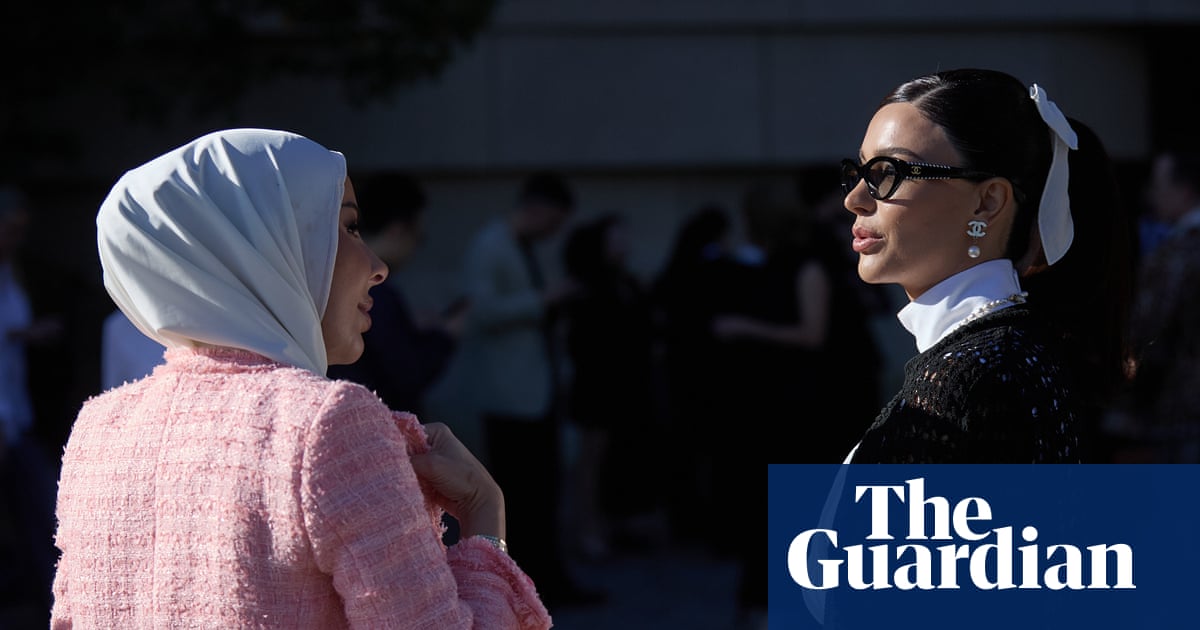
Celebrities including Nicole Kidman, Margot Robbie and Kylie Minogue sat front row at two runway events while bemused locals looked on
They came, they saw, they CC’d. This week Chanel – the world’s second-biggest luxury brand after Louis Vuitton, with sales of US$19.3bn in 2025 – mobilised an estimated team of 300 in Sydney, staging a “replica” presentation of its Cruise 2026/2027 collection, first shown in Biarritz in April.
Its celebrity guest list was headlined by Nicole Kidman, Margot Robbie, Kylie Minogue and Baz Lurhmann. Staff included many of its head office team (French accents were omnipresent), a local production company and about 80 models, 50 of them internationally based.
Traditionally, Chanel stages a smaller-scale repeat Cruise show in November each year as the collection hits stores; recent destinations include Singapore, Hong Kong and Miami.
This year, for the first time, Sydney was singled out as worthy of particular attention. Little wonder, given that half of Chanel’s eight freestanding Australian boutiques are located in the harbour city. Last year, the company made just over half a billion dollars in sales revenue in Australia, according to documents lodged with the Australian Securities and Investments Commission.
Sydney didn’t quite know what hit it when the Chanel circus rolled into town, as cost-of-living pressures continue to weigh on most Australian consumers.
The lead-up to the event ran like a military-style operation that included hand-delivered invitations, photo IDs upon entry, sniffer dogs for all suitcases entering the harbour-side events venue the Cutaway at Barangaroo and hundreds of metres of steel barricades draped with fabric in house-signature beige, creating a exclusion zone around the entire area.
The timing was a surreal coincidence, and a reality check for many. A company whose stock in trade is five-figure handbags wound up staging two shows on exactly the same day that beloved Australian department store chain David Jones – which, until two months ago, had a pricey Chanel shoe boutique on Level 7 – went into voluntary administration, becoming the latest in a conga line of Australian retail casualties.
These travelling shows are an investment in the company’s network of Very Important Customers – so-called VICs.
How valuable are VICs? According to Bain & Company’s 2026 data, they are big spenders who, although representing only 2% of the personal luxury goods market’s total customer base, account for almost half the revenue. Entry-level VICs might spend US$20,000 annually on luxury goods; at the top end, their expenditure ranges from US$200,000 to over $1m.
VIC perks are significant, from personalised shopping experiences to Paris haute couture front row seats, destination Cruise show trips and private brand retreats.
Of the 1,300 people who attended Thursday’s shows, 800 were local and regional clients being treated to a special Sydney experience. According to the UBS 2026 Global Wealth Report, Australia has 1.6 million US dollar millionaires, and on a per-capita basis is the world’s third-richest country by median wealth after Luxembourg and Belgium.
According to Knight Frank’s 2026 Global Wealth Report, Australia remains one of the fastest-growing hubs for high net worth individuals globally, driven by surges in both this country’s billionaire and ultra-wealthy populations. Today, nearly nine out of 10 people on the Australian Financial Review’s Rich 200 List are billionaires.
Yes, there was kvetching.
The Manly Observer reported pushback during local council deliberations about granting a Crown land license to Chanel at Shelly beach on 4 November. The issue was whether to permit serving alcohol, which is normally banned.
Greens councillor Bonnie Harvey told the paper allowing alcohol would leave “a bit of a bad taste in your mouth … knowing that you’ll never be able to legally drink champagne at Shelly beach, unless you are invited by Coco Chanel”.
The complainants were outvoted by those who considered it was a great promotional opportunity for the region.
As the circus leaves town, a few questions remain.
How much did Chanel spend on the exercise? How will it view its return on investment? And what will it do for tourism?
According to industry estimates, the answer to the first question is between $10m and $20m.
As one insider put it, this was a “bespoke” event from start to finish, from the barricades to the gilded baroque armchairs shipped in from France for the front row.
That’s not counting travel, accommodation and hospitality for 800 VIP clients, models and visiting media – about 20 international journalists and influencers who travelled from seven markets, this journalist was told.
The AFR reported three luxury hotels had been booked out, but that didn’t include Crown Towers Sydney, which is adjacent to the Cutaway and was Chanel Central all week, with head office staff, VICs and models stationed there. Such was the volume of Chanel-ites in residence, a special pop-up Chanel concierge desk was installed in the foyer, staffed by chic women in black.
Then there was venue hire – the Cutaway declined to comment on costs – and the transfers, with a substantial fleet of black cars and vans ferrying Chanel VIPs all over town. After the afterparty at the adjacent Wharf 2/3 venue, Hickson Road was so clogged with cars it looked like a presidential motorcade. Anyone other than clients was directed half a kilometre away to hail cabs or wait for Ubers.
Then there’s travel costs (presumably at least business class) and the cost of building the massive set. Chanel recreated the April show’s set, installing mirrored walls and ceilings, laying beige carpet and importing the original armchairs. On Friday, the set served as a backdrop for a “Re-See”, an opportunity to get up close and personal with the collection.
Other costs would have included hair and makeup teams and seamstresses for backstage repairs, who were likely flown in; manicurists; shipping of the samples; floral arrangements and 45 metre-high flower urns commissioned from Coffs Harbour ceramicist Damion Fuller.
On Wednesday night, along with the dinner thrown for clients at Shelly Beach, there was a separate media cocktail party at Justin Hemmes’ Hermitage mansion in Vaucluse, where, yes, Chanel threw some steaks on the barbie.
Then there was a “cultural” program of activities organised around the city for the VIPs. These included surfing lessons at Bondi Beach, swimming at Icebergs, an event at Vaucluse House and another at the Sydney Opera House with the Australian Ballet, for which Chanel is a heritage partner.
Not to mention the celebrities, with potential additional appearance fees on top of whatever ambassadorship deals Chanel has negotiated with Kidman and Robbie. Kylie Minogue’s afterparty performance included a full line of backup dancers.
“Unprecedented, without a doubt,” said one insider of the whole Chanel shebang. “I personally think it’s a testament to Australia’s small but mighty creative community and our growing cultural significance globally.”
“Opportunities such as this help reinforce Sydney’s reputation as a world-class destination and generate international attention for the city among high-value visitors and global audiences,” a spokesperson for Destination NSW told Guardian Australia.
“We are this amazing country, but some people think we’re far away,” noted Luhrmann during a brief chat after the second show. “It’s a real coming-of-age moment.”